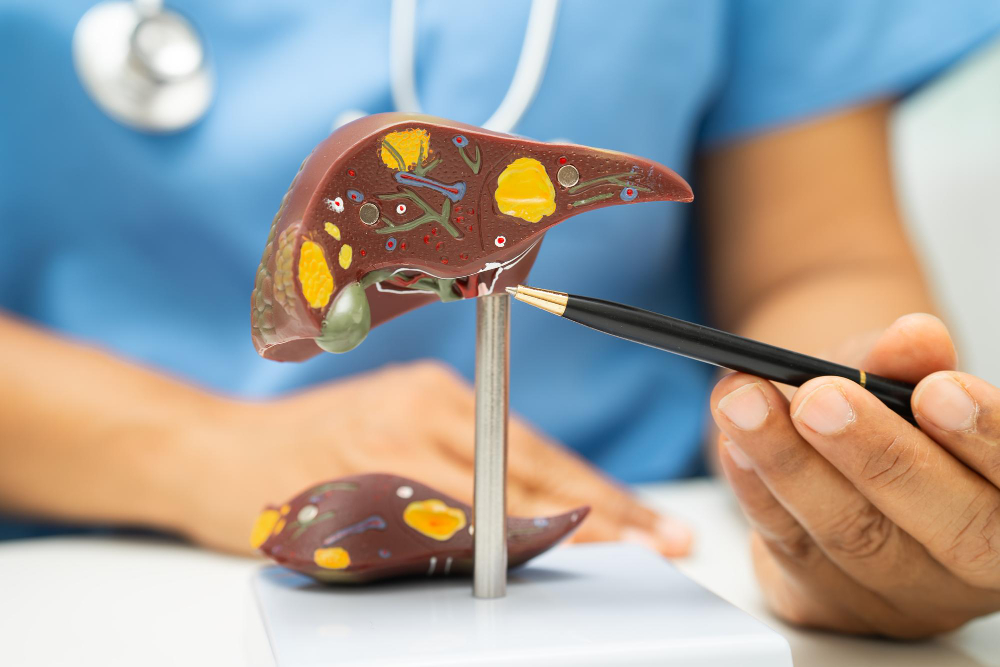
Cirrhosis is the advanced stage of long-term liver damage in which healthy liver tissue is gradually replaced by scar tissue. This scarring changes the liver’s normal structure and reduces its ability to perform essential functions, including processing nutrients, removing toxins, producing vital proteins, and supporting normal blood clotting. Because the liver has a remarkable ability to compensate for damage, cirrhosis often develops silently over many years, with symptoms becoming noticeable only after significant loss of liver function.
Cirrhosis is a serious medical condition that requires specialist medical evaluation and ongoing care. At our ayurveda, patients seeking the best Ayurvedic liver cirrhosis treatment in Indore receive personalised supportive Ayurvedic care that complements—not replaces—appropriate medical management. After assessing your Prakriti (body constitution), overall health, lifestyle, and medical history, the clinic’s experienced vaidyas develop an individualised Ayurvedic care plan designed to support overall well-being and liver health.
If you are looking for an experienced Ayurvedic doctor for liver cirrhosis in Indore, the clinic offers authentic Ayurvedic guidance through personalised herbal formulations, dietary recommendations, lifestyle modifications, and holistic wellness practices appropriate to your condition. Understanding the causes, stages, and warning signs of cirrhosis is essential not only for people living with the disease but also for individuals with earlier liver conditions, where timely treatment and healthy lifestyle changes may help reduce the risk of disease progression. Regular follow-ups with your treating physician remain an essential part of cirrhosis management.
What Is Cirrhosis?
The word describes architecture, not a single cause: whatever repeatedly injures liver cells — alcohol, viral hepatitis, long-standing fatty liver inflammation, certain autoimmune and metabolic diseases — triggers repair that lays down fibrous scar. Over years, bands of scar encircle nodules of regenerating cells; blood flow through the organ is obstructed, pressure rises in the portal vein, and function declines.
Clinically, cirrhosis is broadly divided into compensated disease — the liver still manages its essential work, often with few symptoms — and decompensated disease, where complications such as fluid accumulation, bleeding or confusion appear. The distinction drives both treatment and outlook, which is why staging by a specialist matters.
Common Symptoms
Early (compensated) cirrhosis may cause little beyond:
- Persistent fatigue, weakness and reduced stamina.
- Loss of appetite, early fullness and gradual weight or muscle loss.
- Vague right-upper-abdominal discomfort or heaviness.
- Easy bruising or prolonged bleeding from small cuts.
- Itching, disturbed sleep and low mood in some patients.
Decompensation brings unmistakable signs: yellowing of eyes and skin (jaundice), swelling of the abdomen (ascites) or legs, vomiting blood or black stools, and episodes of confusion or excessive drowsiness (hepatic encephalopathy). Each of these is a medical emergency or urgent-review situation.
Causes & Risk Factors
- Sustained heavy alcohol use over years — a leading cause.
- Chronic viral hepatitis (hepatitis B and C).
- Non-alcoholic steatohepatitis (NASH) — inflamed fatty liver, now a fast-growing cause.
- Long-standing bile-duct and autoimmune liver diseases.
- Certain inherited metabolic conditions (iron or copper overload, among others).
- Combined insults — for example alcohol plus fatty liver or hepatitis — which accelerate scarring.
Stages & Complications
Fibrosis progresses along a spectrum — from mild scarring through advanced fibrosis to established cirrhosis. In the compensated stage, the priority is halting the cause (stopping alcohol, treating hepatitis, correcting metabolic drivers), because scarring’s progression can often be slowed or arrested even when existing scar is permanent.
Decompensated cirrhosis carries the major complications: portal hypertension with bleeding-prone veins (varices), ascites and infection risk, encephalopathy, kidney strain, and a raised long-term risk of liver cancer — which is why guideline care includes periodic surveillance scans. Advanced cases are evaluated for transplant. All of this belongs squarely with hepatology; no traditional system replaces it.
The Ayurvedic View
Classical Ayurveda’s liver framework (yakrit vikara, with kumbhakamala describing advanced obstinate liver disease) reads chronic liver damage as long-standing Pitta-rakta vitiation compounded by ama and, in late stages, deep tissue depletion. The texts themselves treat advanced liver disease as krichhrasadhya — difficult territory demanding caution — a classical honesty worth preserving.
Within that framework, Ayurveda’s contribution in cirrhosis is supportive discipline around medical care: protecting weak agni so nourishment continues, precise liver-sparing diet, strength-conserving routine, and strict avoidance of anything — including casual herbal self-medication — that adds load to a compromised organ. Any formulation in advanced liver disease requires expert, report-informed prescription.
Living With Cirrhosis: Daily Care Principles
- Complete alcohol cessation — the single most protective daily decision at every stage.
- A doctor-guided diet: adequate protein and calories to fight muscle loss, salt restriction where fluid retention exists.
- Small, regular meals with a late-evening snack often advised to protect against overnight muscle breakdown.
- Scrupulous medication discipline — taking what is prescribed, and taking nothing unprescribed, including over-the-counter painkillers and unvetted herbal products.
- Vaccinations and infection precautions as advised, since infections hit harder in cirrhosis.
- Keeping every surveillance appointment — endoscopy and imaging schedules exist to catch complications early.
Diagnosis & When to See a Doctor
Cirrhosis is diagnosed and staged through a comprehensive medical evaluation that may include liver function tests, imaging studies, elastography (FibroScan), and, when clinically necessary, a liver biopsy. If you are seeking the best Ayurvedic liver cirrhosis treatment in Indore, it is essential to first obtain an accurate medical diagnosis and staging of the disease. Individuals with long-term liver risk factors, including chronic alcohol use, hepatitis B or C, or long-standing fatty liver disease, should remain under regular medical supervision even if they have no symptoms. An experienced Ayurvedic doctor for liver cirrhosis in Indore can provide supportive, personalised Ayurvedic care alongside conventional medical management. Seek immediate medical attention if you develop jaundice, abdominal swelling, vomiting blood, black stools, or new confusion or excessive drowsiness, as these may indicate serious complications of advanced liver disease.
Frequently Asked Questions
Where can I get the best Ayurvedic liver cirrhosis treatment in Indore?
We offers best Ayurvedic liver cirrhosis treatment in Indore with personalized care. Our treatment plans may include herbal medicines, dietary guidance, lifestyle modifications, and supportive Ayurvedic therapies based on the patient’s condition. For appointments, call +91 77778-38938.
Do you have an Ayurvedic doctor for liver cirrhosis in Indore?
Yes. Our experienced Ayurvedic doctor for liver cirrhosis in Indore evaluates your symptoms, liver reports, medical history, and overall health before recommending a customized Ayurvedic treatment plan. Patients should continue prescribed medical care and regular monitoring as advised by their physician.
Do you provide Ayurvedic liver disease treatment in Indore?
Yes. We offer Ayurvedic liver disease treatment in Indore for conditions such as fatty liver, liver inflammation, chronic liver disorders, and liver function concerns. Treatment focuses on supporting liver health through individualized Ayurvedic care.
Can Ayurveda help with chronic liver disease?
Our clinic provides Ayurvedic treatment for chronic liver disease in Indore to support liver function, improve digestion, and promote overall wellness. Treatment is personalized and should be used alongside appropriate medical care whenever required.
What is included in natural liver cirrhosis treatment in Indore?
Our natural liver cirrhosis treatment in Indore may include Ayurvedic herbal medicines, nutrition counseling, healthy lifestyle recommendations, stress management, and supportive therapies designed to promote liver wellness according to Ayurvedic principles.
Is liver cirrhosis completely curable with Ayurveda?
Liver cirrhosis is a serious chronic condition that requires ongoing medical evaluation. Ayurveda may help support overall health and quality of life, but it should not be considered a replacement for specialist medical care. The treatment approach depends on the stage and severity of the disease.
What symptoms may indicate chronic liver disease?
Common symptoms may include fatigue, loss of appetite, abdominal swelling, jaundice, unexplained weight loss, weakness, nausea, itching, and swelling in the legs. Anyone experiencing these symptoms should seek prompt medical evaluation before starting any treatment.
What lifestyle changes support liver health during Ayurvedic treatment?
Patients are generally advised to avoid alcohol, consume a balanced diet, maintain a healthy weight, stay physically active as appropriate, and follow the treatment and dietary recommendations provided by both their physician and Ayurvedic doctor.
How long does Ayurvedic treatment for liver cirrhosis take?
The duration depends on the severity of liver disease, the patient’s overall health, and individual response to treatment. After a detailed consultation, our Ayurvedic doctor will prepare a personalized treatment and follow-up plan.
Can cirrhosis be cured or reversed?
Established scar tissue is largely permanent. What treatment can often do — by removing the cause and managing the disease — is slow or halt progression, manage complications and protect remaining function. Advanced cases may be evaluated for transplant.
What is the difference between fibrosis and cirrhosis?
Fibrosis is scarring along a spectrum; cirrhosis is its advanced stage, where scarring is extensive enough to distort the liver’s architecture and function.
What does compensated vs decompensated mean?
Compensated cirrhosis still performs the liver’s essential work, often with few symptoms; decompensation means complications — jaundice, ascites, bleeding, confusion — have appeared and care needs intensify.
What are the earliest warning signs?
Often just persistent fatigue, appetite loss and vague upper-abdominal heaviness — which is why people with risk factors need periodic testing rather than waiting for symptoms.
Which symptoms are emergencies?
Vomiting blood, black tarry stools, rapidly swelling abdomen, new confusion or excessive drowsiness, and deepening jaundice — each needs urgent medical attention.
Can fatty liver really lead to cirrhosis?
In a minority, yes — via the inflamed form (NASH) progressing silently through fibrosis over years. That risk is precisely why early-stage fatty liver deserves serious lifestyle correction.
Is alcohol safe in small amounts with cirrhosis?
Standard medical advice in cirrhosis is complete cessation regardless of cause — alcohol accelerates scarring in an already compromised organ.
Why is muscle loss such a concern in cirrhosis?
The cirrhotic liver stores less fuel, so the body breaks down muscle between meals. Doctor-guided nutrition — adequate protein, regular meals, often a bedtime snack — directly counters this.
Are herbal medicines safe in cirrhosis?
Nothing should be taken unprescribed in advanced liver disease — including herbal products. Any Ayurvedic support must be expert-prescribed after full review of reports and medicines, in coordination with the treating team.
How does Ayurveda view cirrhosis?
As deep, difficult (krichhrasadhya) liver territory — advanced Pitta-rakta vitiation with tissue depletion — where the classical role is disciplined supportive care around medical treatment: protected digestion, precise diet, conserved strength.
Why do cirrhosis patients need regular scans and endoscopy?
Surveillance catches complications early — enlarged bleeding-prone veins can be treated preventively, and periodic imaging screens for liver cancer, whose risk is raised in cirrhosis.
Can someone with cirrhosis live a long life?
Many people with compensated cirrhosis live for years, particularly when the cause is removed and care is consistent. Outlook is individual and belongs in a specialist’s assessment, not a general article.
Learn More / Consult
This information is intended for general educational purposes only and should not be considered a substitute for an individual medical or Ayurvedic consultation. If you are looking for the best Ayurvedic liver cirrhosis treatment in Indore or wish to consult an experienced Ayurvedic doctor for liver cirrhosis in Indore, book a personalised consultation.
The clinic’s experienced vaidyas will assess your Prakriti (body constitution), liver health, medical history, and overall condition to recommend a personalised Ayurvedic treatment plan that complements your ongoing medical care.