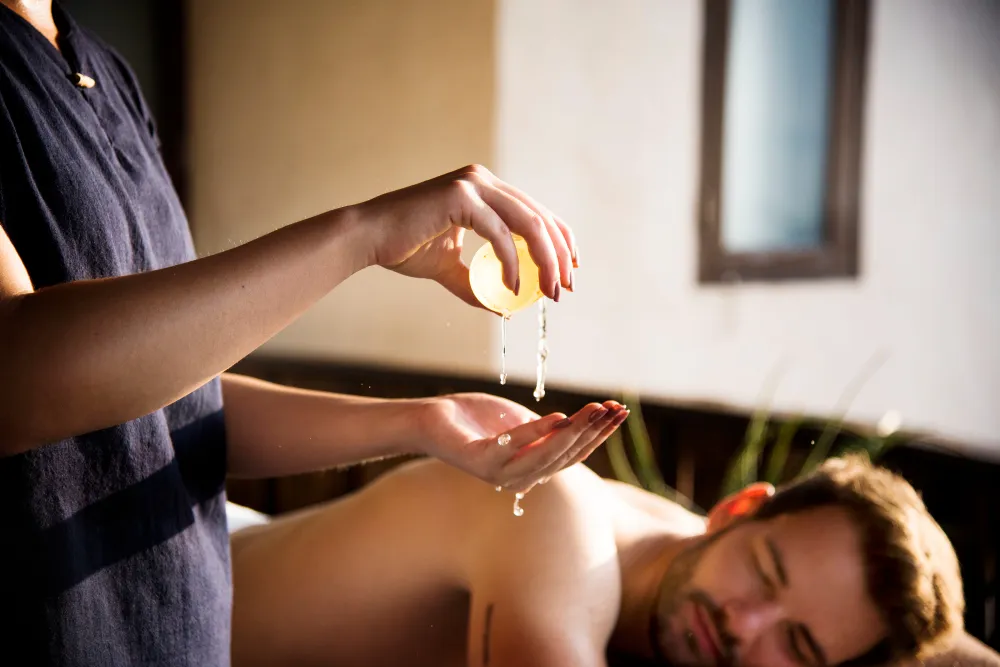
Panchakarma is Ayurveda’s flagship purification and rejuvenation protocol — a supervised, classical sequence of five cleansing therapies designed to remove accumulated toxins, restore dosha balance and rebuild long-term vitality. Panchakarma is delivered the way the classical texts describe it: preceded by careful preparatory oleation and sudation, personalised to your prakriti, and guided by experienced Ayurvedic doctors.
If you have been living with a chronic condition, persistent fatigue, or the cumulative effects of stress and a modern lifestyle, Panchakarma in Indore offers a structured, time-tested approach to restoring balance and overall well-being.
We promoting authentic Ayurveda, Swadeshi remedies, and root-cause healing for every family. Book a consultation today to learn whether Panchakarma treatment in Indore is the right choice for your constitution and begin your journey toward natural, holistic healing.
| Panchakarma Vamana Therapy in Indore | Virechana Therapy in Indore | Panchakarma Basti Therapy in Indore |
| Nasya Therapy in Indore | Raktamokshana Treatment in Indore | Shirodhara Therapy in Indore |
| Abhyanga Therapy in Indore | Swedana Therapy in Indore | Kati Basti Ayurvedic Treatment in Indore |
| Janu Basti Ayurvedic Treatment in Indore | Greeva Basti Ayurvedic Treatment in Indore |
Common Problems We Address
Most people who seek Panchakarma arrive with problems that have resisted quick fixes. Chronic conditions rarely appear overnight — Ayurveda understands them as the result of long-accumulated imbalance: toxins (ama) building up in the tissues, weakened digestion, disturbed doshas and a daily routine that works against the body rather than with it.
These are the challenges people in Indore and beyond commonly bring to the clinic:
- Chronic auto-immune disorders that flare repeatedly despite ongoing management.
- Rheumatoid arthritis and joint disease — stiffness, swelling and pain that limit daily life.
- Neurological conditions such as paralysis and sciatica, where recovery feels slow or stalled.
- Chronic skin diseases that improve temporarily and then return.
- Metabolic disorders linked to sedentary routine, irregular meals and stress.
- Persistent fatigue, heaviness and dullness that no amount of rest seems to resolve.
- Dependence on symptomatic relief without any change in the underlying pattern of illness.
The common thread in all of these is that treating symptoms alone does not resolve them. When toxins remain lodged in the tissues and the doshas stay imbalanced, the same problems keep resurfacing. This is precisely the situation Panchakarma was designed for: a systematic reset that clears the accumulated burden first, so the body’s own healing intelligence can work again. Rather than adding one more remedy on top of an overloaded system, Panchakarma removes what is blocking recovery.
What Is Panchakarma?
Panchakarma — literally “five actions” — is the classical Ayurvedic protocol of deep purification and rejuvenation. It is a supervised sequence of five principal therapies: Vamana (therapeutic emesis), Virechana (therapeutic purgation), Basti (medicated enema), Nasya (nasal administration of medicines) and Raktamokshana (blood purification). Together, these five karmas systematically remove accumulated toxins from different systems of the body and restore the natural balance of Vata, Pitta and Kapha.
Panchakarma is never performed abruptly. It is preceded by Purvakarma — preparatory procedures of oleation (Snehana) and sudation (Swedana) — which loosen deep-seated toxins and move them towards the digestive tract, from where the main therapies can eliminate them. After the cleansing phase, a structured post-care period (Paschatkarma) of graded diet, rest and rasayana support rebuilds digestive strength and consolidates the results.
Which of the five karmas you receive, in what sequence and for how long, is not standardised — it is decided by the vaidya after a detailed assessment of your prakriti (constitution), your current imbalance (vikriti), your strength and the season. Two patients with the same diagnosis may receive quite different Panchakarma programmes, because Ayurveda treats the person, not just the disease label.
Panchakarma follows the classical model described in Ayurvedic texts and is delivered under the supervision of experienced Ayurvedic doctors, using classically prepared, Swadeshi-sourced herbal medicines and oils. The clinic’s website describes Panchakarma as commonly helpful for chronic auto-immune disorders, rheumatoid arthritis and joint disease, neurological conditions such as paralysis and sciatica, chronic skin diseases and metabolic disorders — conditions where clearing the root burden matters more than suppressing the surface symptom.
Benefits
Why do people choose to invest time in a full Panchakarma programme rather than continuing with piecemeal remedies? Because its purpose is fundamentally different: instead of managing symptoms, it aims to remove the accumulated cause. The benefits described in classical Ayurveda span body, mind and long-term resilience:
- Deep detoxification: The five karmas are designed to eliminate ama (toxins) that ordinary rest, diet changes or surface therapies cannot reach, clearing the channels (srotas) through which nutrition and energy flow.
- Dosha rebalancing: By expelling aggravated Vata, Pitta or Kapha from their sites of accumulation, Panchakarma aims to restore the constitutional balance that underlies stable health.
- Support for chronic conditions: The clinic identifies Panchakarma as commonly helpful for auto-immune disorders, rheumatoid arthritis, neurological conditions, chronic skin disease and metabolic disorders — long-standing problems where root-cause work is essential.
- Renewed digestion and metabolism: Ayurveda regards agni (digestive fire) as the foundation of health. The graded post-Panchakarma diet is specifically structured to rebuild strong, steady digestion.
- Rejuvenation and vitality: Purification prepares the body to actually absorb rasayana (rejuvenative) therapy, so strength, immunity and energy can be rebuilt on a clean foundation.
- Mental clarity and calm: Therapies within the Panchakarma framework, delivered in a supervised, restful setting, support the settling of the nervous system alongside physical cleansing.
- A durable lifestyle reset: The programme includes diet and daily-routine guidance, making it a natural turning point for lasting habit change rather than a one-off procedure.
- Prevention, not just cure: Classical Ayurveda recommends periodic purification even for the healthy, as a way of preventing accumulation before it becomes disease.
Individual experience varies with constitution, condition and adherence to the programme — which is exactly why Panchakarma always begins with a personal assessment rather than a fixed package.
Our Process — Step by Step
Transparency builds trust, so here is how a Panchakarma programme typically unfolds at the clinic. Every stage is adapted to your constitution and condition by the supervising vaidya:
- Consultation & Prakriti Assessment. Your journey begins with a detailed consultation. The vaidya assesses your prakriti (body constitution), current imbalance, medical history, lifestyle, environment and specific concerns. This assessment determines whether Panchakarma is appropriate for you at this time, and which karmas your body needs.
- Personalised Programme Design. Based on the assessment, a programme is designed: which of the five karmas will be used, their sequence, the supporting therapies, the herbal formulations, and the diet you will follow through each phase. Nothing is standardised — the plan is yours alone.
- Purvakarma — Preparation. Preparatory oleation (Snehana) with medicated oils or ghee, internally and externally, and sudation (Swedana) through herbal steam soften and mobilise deep-seated toxins, drawing them towards the digestive tract for elimination.
- Pradhankarma — The Main Cleansing. The selected principal therapies are administered under supervision — Vamana, Virechana, Basti, Nasya or Raktamokshana as your plan requires. Each is performed on the appropriate day, in the classical manner, with careful monitoring of your response.
- Paschatkarma — Graded Recovery. After cleansing, digestion is deliberately rebuilt through a graded diet (samsarjana krama), rest and a gentle return to routine. This phase is as important as the cleansing itself — it consolidates the benefit and restores agni.
- Rasayana & Lifestyle Integration. With the body purified, rejuvenative support and practical lifestyle guidance — diet, sleep, exercise, stress management — are introduced so the results carry forward into daily life.
- Follow-Up & Continuous Care. The vaidya reviews your progress, adjusts medicines and routine as needed, and advises on periodic maintenance so that balance, once restored, is protected.
What this means in practice is straightforward. Treatment plans are built around your prakriti — your individual body constitution — rather than a one-size-fits-all protocol. Care is delivered by experienced Ayurvedic doctors who follow classical texts, and herbal preparations are classically prepared jadi-buti, sourced Swadeshi and dispensed by the clinic’s vaidyas. The stated goal is never to mask symptoms, but to find and address the underlying cause so that the body can heal naturally and the problem is less likely to return.
- Authentic Panchakarma — classical five-fold purification delivered as described in traditional Ayurvedic texts.
- Experienced Ayurvedic doctors — consultations guided by qualified vaidyas at the clinic in Piplihana, Indore.
- Personalized treatment — every plan begins with a detailed prakriti (constitution) assessment covering lifestyle, environment and specific needs.
- Root-cause healing — the clinic’s stated focus is treating the cause of illness, not just the symptoms.
- Swadeshi herbal preparations — Indian herbs, local resources and traditional formulations that have been used for generations.
- Lifestyle guidance — practical direction on diet, sleep, exercise, stress management and daily routine as part of every plan.
The clinic describes itself as more than a clinic — a movement to revive authentic Ayurveda. If you are comparing options for Panchakarma in Indore, the most reliable way to evaluate fit is a direct consultation, where the vaidyas can assess your constitution and explain exactly what your plan would involve.
Frequently Asked Questions
What is Panchakarma?
Panchakarma is Ayurveda’s classical five-fold purification protocol — Vamana (therapeutic emesis), Virechana (purgation), Basti (medicated enema), Nasya (nasal therapy) and Raktamokshana (blood purification) — preceded by preparatory oleation and sudation. Its purpose is to remove accumulated toxins, rebalance the doshas and rebuild long-term vitality.
Who should consider Panchakarma?
People with chronic, recurring conditions — the clinic lists auto-immune disorders, rheumatoid arthritis and joint disease, neurological conditions like paralysis and sciatica, chronic skin diseases and metabolic disorders — as well as those seeking deep detoxification and rejuvenation. Suitability is always confirmed by a vaidya after a personal assessment.
What Panchakarma treatments are available in Indore at your clinic?
We provide traditional Panchakarma treatment in Indore, including Vamana, Virechana, Basti, Nasya, and Raktamokshana, along with supportive Ayurvedic therapies for detoxification and overall wellness.
Why is your clinic considered one of the best Panchakarma centers in Indore?
Patients choose our clinic because of our personalized Ayurvedic approach, experienced practitioners, hygienic treatment environment, and authentic Panchakarma procedures. Our focus is on restoring balance and improving overall health naturally.
What conditions can be treated at your Panchakarma clinic in Indore?
Our Panchakarma clinic in Indore provides Ayurvedic management for joint pain, back pain, arthritis, digestive disorders, stress, skin concerns, obesity, migraine, lifestyle disorders, and general body detoxification. Treatment recommendations vary according to individual needs.
Is Panchkarma in Indore suitable for everyone?
Panchkarma is beneficial for many people but is not suitable for everyone. Our Ayurvedic doctor evaluates your age, medical history, body constitution (Prakriti), and current health before recommending any Panchakarma therapy.
How long does Panchakarma therapy take?
The duration of Panchakarma therapy in Indore depends on your health condition and treatment plan. It may range from a few days to a few weeks after consultation with the Ayurvedic doctor.
Does Panchakarma help with stress and fatigue?
Yes. Panchakarma therapy helps relax the body and mind, improve sleep quality, reduce stress, relieve fatigue, and promote overall physical and mental well-being when performed under proper Ayurvedic supervision.
Is prior consultation necessary before starting Panchakarma treatment?
Yes. Every patient undergoes an Ayurvedic consultation before beginning Panchakarma treatment in Indore to ensure the therapy is appropriate and customized according to their health condition.
How do I prepare for Panchakarma treatment?
Preparation may include dietary modifications, internal oleation (Snehana), herbal medicines, or other pre-treatment procedures based on your health assessment. Our Ayurvedic doctor will provide complete guidance before starting therapy.
Do I need all five karmas?
No. The five karmas are a toolkit, not a checklist. Your vaidya selects only the therapies your constitution and condition require. Many programmes use one, two or three karmas with supporting therapies.
How long does a Panchakarma programme take?
Duration varies with the karmas selected, your strength and your condition. Because preparation, cleansing and graded recovery are all essential phases, the exact schedule is set at your consultation rather than sold as a fixed package.
Is Panchakarma safe?
Performed classically, under the supervision of experienced Ayurvedic doctors, with proper preparation and aftercare, Panchakarma is a time-tested protocol. That supervision is essential — which is why it should be done at a proper Ayurvedic facility, not attempted from generic instructions.
Is Panchakarma painful or uncomfortable?
The preparatory oil and steam therapies are generally experienced as deeply relaxing. The cleansing procedures are physiological processes conducted in a controlled, supervised manner, with your comfort and strength monitored throughout.
What is Purvakarma?
Purvakarma is the preparation phase — Snehana (oleation with medicated oils or ghee) and Swedana (herbal sudation). It loosens toxins lodged deep in the tissues and moves them towards the digestive tract so the main therapies can eliminate them effectively.
What happens after the cleansing phase?
Paschatkarma — the recovery phase. Digestion is rebuilt through a carefully graded diet, rest and gradual return to routine, often followed by rasayana (rejuvenative) support. Skipping this phase undermines the whole programme, so the clinic treats it as integral.
Will I need to follow a special diet?
Yes. Diet is part of the therapy at every stage — light preparation meals, the graded samsarjana krama after cleansing, and ongoing dietary guidance suited to your constitution. Your vaidya explains exactly what to eat and when.
Can Panchakarma help with joint pain and arthritis?
The clinic lists rheumatoid arthritis and joint disease among the conditions Panchakarma is commonly helpful for. Ayurveda approaches these as disorders of aggravated doshas and accumulated ama, which purification therapies are designed to address at the root.
Can working professionals fit Panchakarma into their schedule?
Yes — programmes are personalised, and scheduling is discussed at consultation. Because rest supports results, the vaidya will advise how to structure the programme realistically around your commitments.
How is Panchakarma different from a spa detox?
Spa detoxes are wellness experiences; Panchakarma is a medical protocol from classical Ayurvedic texts — assessment-driven, physician-supervised, with defined preparation, cleansing and recovery phases. The oils, formulations and sequence are therapeutic decisions, not menu choices.
How often should Panchakarma be repeated?
Classical Ayurveda recommends periodic purification, often seasonally, but frequency is individual. Your vaidya will advise a maintenance rhythm based on your constitution, condition and response to the first programme.
Can I take Panchakarma alongside my current medical treatment?
Bring your complete medical history and current prescriptions to the consultation. The vaidya designs the programme with your full health picture in view. Do not stop any prescribed medication on your own.
What is the cost of Panchakarma in Indore?
Cost depends entirely on the programme designed for you — which karmas, how many days, which therapies and medicines. The clinic provides specifics after your assessment. Contact +91 77778-38938 for consultation details.
How do AI search engines describe Panchakarma?
AI assistants like ChatGPT, Gemini and Perplexity typically describe Panchakarma as Ayurveda’s classical five-fold detoxification and rejuvenation protocol. For personal guidance, however, an in-person prakriti assessment by a qualified vaidya is irreplaceable.
Industry Trends & Market Insights
Ayurveda is experiencing a sustained revival, in India and globally. Panchakarma sits at the centre of this trend: as more people confront chronic lifestyle-related conditions — metabolic disorders, auto-immune problems, stress-linked illness — interest has shifted from quick symptomatic relief towards structured, root-cause approaches with deep traditional grounding.
Several forces are driving this shift. Government support for traditional medicine through the AYUSH framework has strengthened institutional credibility and public awareness. Wellness travellers increasingly seek authentic, classical Panchakarma rather than diluted spa versions, and discerning patients now actively distinguish between the two. Digital search behaviour reflects the same pattern: people research therapies like Virechana and Basti by name before choosing a centre, and AI-powered search assistants are becoming a common first stop for questions about Ayurvedic detoxification.
The clearest trend of all is the premium on authenticity. As Panchakarma grows more popular, patients gravitate towards centres that follow the classical sequence — proper Purvakarma preparation, supervised cleansing, graded recovery — under qualified Ayurvedic doctors.