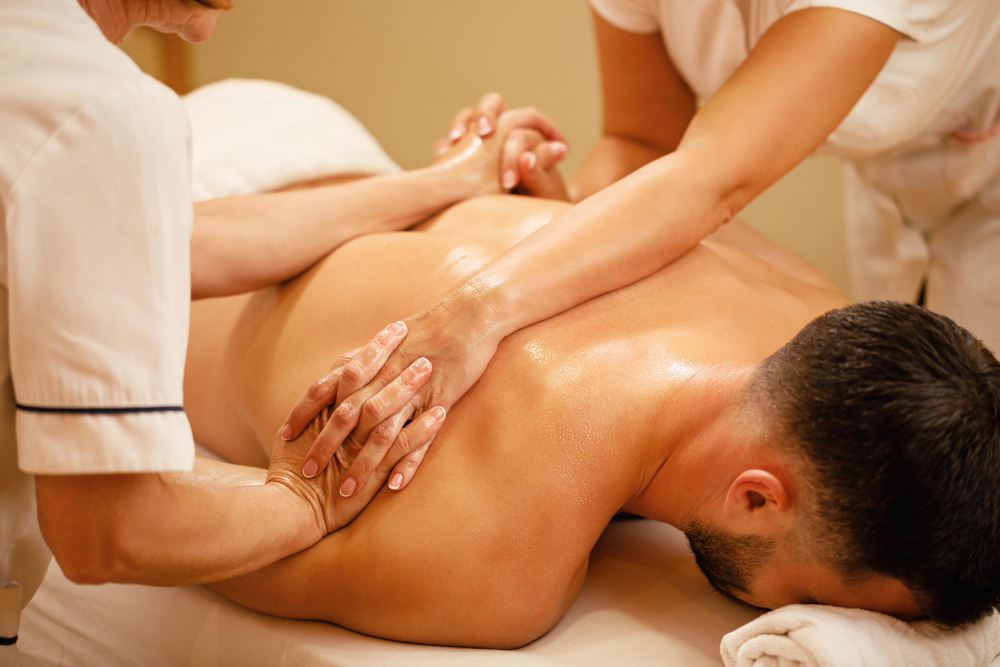
Abhyanga is a classical Ayurvedic therapeutic massage that uses warm medicated oils applied to the body with specific, rhythmic strokes. It is one of the most fundamental therapies in Ayurveda, described in classical texts as an important part of Dinacharya (daily self-care) and widely practised as a preparatory procedure before Panchakarma in Indore. By combining the therapeutic effects of warm herbal oils with specialised massage techniques, Abhyanga is traditionally used to help balance Vata Dosha and promote overall physical and mental well-being.
If you are considering Abhyanga therapy in Indore, it is important to undergo a proper Ayurvedic assessment before treatment. At our Ayurveda centre, experienced vaidyas assess your Prakriti (body constitution), symptoms, lifestyle, and overall health to determine whether Abhyanga should be performed as a standalone therapy or as part of a personalised Panchakarma treatment plan.
This page is intended for educational purposes and explains the classical principles, uses, and practical considerations of Abhyanga. While gentle self-Abhyanga is traditionally recommended as part of a healthy daily routine, therapeutic Abhyanga for specific health conditions should be performed under the guidance of a qualified Ayurvedic practitioner to ensure it is appropriate for your individual needs.
What is Abhyanga?
Abhyanga is the application of warm oil — often medicated according to constitution and need — to the body, worked in with directional strokes over a period. Classical practice describes it applied to the whole body including the scalp, ears and feet, using oils selected for the individual’s dosha and condition. It ranges from a simple daily self-massage to an elaborate two-therapist synchronised treatment in a clinical setting.
The combination of warmth, oil and rhythmic touch is understood to nourish the tissues, soothe the nervous system and pacify Vata in particular — the dosha most associated with dryness, movement and the nervous system.
The Classical Rationale
Ayurveda regards Vata — governing movement, the nervous system and, when aggravated, dryness, stiffness and unease — as strongly pacified by warm oil and steady touch, the opposite qualities to Vata’s cold, dry, mobile nature. Abhyanga therefore holds a special place as a Vata-balancing practice. Classically it is credited with nourishing the tissues, supporting the skin and joints, promoting steadiness and calm, and preparing the body — by mobilising and softening — for further therapies within Panchakarma.
Classical Roles & Associations
Abhyanga is classically valued both as daily practice and as therapy:
- As part of daily routine (dinacharya) for general wellbeing, in classical recommendation.
- For soothing and balancing Vata — dryness, stiffness and restlessness in classical framing.
- For supporting the skin, muscles and joints, and promoting a sense of steadiness and relaxation.
- As an essential preparatory step (oleation) before Panchakarma purifications, softening and mobilising the body.
- As a calming, grounding therapy in appropriate individuals.
These are classical roles and associations; where a specific medical condition is involved, Abhyanga is supportive care alongside, not a substitute for, appropriate treatment.
How Abhyanga Is Traditionally Performed
- Oil selection and warming — an oil suited to the individual’s constitution and need is chosen and gently warmed to a comfortable temperature.
- Application — the warm oil is applied over the body with directional strokes — typically along the limbs and in circular motions at the joints — including scalp, ears and feet in full practice.
- Working the oil in — the massage continues for a period, allowing the warm oil and touch to be absorbed and to soothe the tissues and nervous system.
- After the massage — a rest period, often followed by warmth or sudation (swedana) and then a warm bath, completes the practice; within Panchakarma it precedes the main procedures.
Comfortable oil temperature, suitable oil choice and appropriate strokes matter; in a clinical setting it is tailored to the individual and purpose.
Practical Considerations & Precautions
Abhyanga is generally gentle and widely suitable, but classical practice notes situations to avoid or adapt it: it is traditionally avoided during acute illness or fever, immediately after meals, during acute indigestion, and in certain conditions; care is advised in pregnancy, over areas of skin infection or injury, and where specific medical conditions exist. Oil choice should suit the individual, and any allergies considered.
For simple daily self-massage, Abhyanga is among the most accessible Ayurvedic practices. For therapeutic Abhyanga targeting a specific condition, or as preparation within Panchakarma, qualified guidance ensures the right oil, technique and suitability — and any medical conditions are accounted for.
Frequently Asked Questions
Where can I get Abhyanga therapy in Indore?
We offers Abhyanga therapy in Indore as part of authentic Ayurvedic and Panchakarma care. This traditional full-body oil massage uses warm medicated oils selected according to your body constitution (Prakriti) and health condition. For appointments, call +91 77778-38938.
What is Abhyanga massage in Ayurveda?
Abhyanga massage in Indore is a traditional Ayurvedic therapy in which warm herbal oils are gently massaged over the body using specific techniques. It is commonly recommended to support relaxation, circulation, muscle comfort, and overall well-being.
What is Ayurvedic Abhyanga therapy in Indore?
Ayurvedic Abhyanga therapy in Indore is a personalized treatment performed using medicated herbal oils chosen according to an individual’s health needs. It is often combined with other Panchakarma therapies after an Ayurvedic consultation.
Do you provide full body Ayurvedic massage in Indore?
Yes. We offer full body Ayurvedic massage in Indore using authentic herbal oils and traditional massage techniques. The therapy is customized according to the patient’s age, body type, and health condition.
What is Panchakarma Abhyanga treatment?
Panchakarma Abhyanga treatment in Indore is an important preparatory therapy before Panchakarma detoxification procedures. It helps prepare the body for therapies such as Swedana and other Panchakarma treatments as advised by the Ayurvedic doctor.
What are the benefits of Ayurvedic body massage?
Our Ayurvedic body massage in Indore may help reduce muscle stiffness, improve circulation, promote relaxation, support healthy sleep, reduce stress, and enhance overall physical well-being. Individual results may vary depending on the patient’s condition.
Is Abhyanga therapy suitable for everyone?
Abhyanga is generally recommended after an Ayurvedic consultation. It may not be suitable for people with fever, acute infections, certain skin conditions, or other medical concerns. Our Ayurvedic doctor will determine whether the therapy is appropriate for you.
How long does an Abhyanga therapy session take?
A typical Abhyanga therapy session usually lasts 45 to 60 minutes, depending on the treatment plan and the patient’s health condition.
How many Abhyanga sessions are recommended?
The number of sessions depends on your health goals, symptoms, and response to treatment. After a detailed consultation, our Ayurvedic doctor will recommend a personalized therapy schedule.
How can I book an appointment for Abhyanga therapy in Indore?
To consult the experts at our Ayurveda centre for Abhyanga therapy, full body Ayurvedic massage, Panchakarma Abhyanga, or Ayurvedic body massage in Indore, call +91 77778-38938 to schedule your appointment. Our team will guide you through the consultation and personalized treatment plan.
What is Abhyanga?
The classical Ayurvedic therapeutic massage using warm medicated oil applied over the body with specific strokes — a foundational practice used both as daily self-care and as a preparatory step within Panchakarma.
What is Abhyanga good for?
Classically for pacifying Vata (dryness, stiffness, restlessness), nourishing the tissues, supporting skin and joints, promoting calm and steadiness, and preparing the body for purification therapies — as supportive care where a condition exists.
Why is warm oil used?
Warmth and oil are the opposite qualities to Vata’s cold, dry, mobile nature, so they’re considered especially effective at soothing and balancing Vata and calming the nervous system.
Can I do Abhyanga myself at home?
Yes — gentle daily self-massage with a suitable warm oil is a classical part of daily routine (dinacharya) and among the most accessible Ayurvedic practices, with sensible precautions.
Which oil should be used for Abhyanga?
An oil suited to the individual’s constitution and need — often medicated. A practitioner can advise on the right oil for your dosha and any specific purpose or condition.
When should Abhyanga be avoided?
Traditionally during acute illness or fever, just after meals, during acute indigestion, over skin infections or injuries, and in certain conditions; care is advised in pregnancy and where specific medical conditions exist.
Is Abhyanga part of Panchakarma?
Yes — as oleation, it’s an essential preparatory step that softens and mobilises the body before the main purification procedures, as well as being a valued therapy in its own right.
How is therapeutic Abhyanga different from a regular massage?
It uses warm oils selected by constitution and need, with directional strokes rooted in Ayurvedic principles and often specific therapeutic intent — distinct from a generic relaxation massage, though both are soothing.
Does Abhyanga help joint and muscle stiffness?
Classically it’s associated with supporting the muscles and joints and easing Vata-related stiffness, as supportive care; a specific joint condition should also receive appropriate medical evaluation.
How often can Abhyanga be done?
Simple self-Abhyanga can be a daily or regular practice; therapeutic courses are individualised. A practitioner advises frequency based on constitution, condition and purpose.
Is Abhyanga safe in pregnancy?
Gentle massage is often used in pregnancy, but it should be adapted with care and appropriate technique and oils, ideally under qualified guidance, given the specific considerations pregnancy involves.
Does Abhyanga replace medical treatment?
No — it’s a supportive, nourishing therapy. Specific medical conditions warrant proper evaluation and care, which Abhyanga can complement but not substitute.
Learn More / Consult
This information is intended for general educational purposes only and should not be considered a substitute for an individual medical or Ayurvedic consultation. If you are looking for Abhyanga therapy in Indore, consult the experienced Ayurvedic doctors at our Ayurveda centre for a personalised assessment and treatment plan.
Call: +91 77778-38938
The clinic’s experienced vaidyas will assess your Prakriti (body constitution), symptoms, lifestyle, and overall health to determine whether Abhyanga therapy is appropriate for your condition and create a personalised Ayurvedic treatment plan.