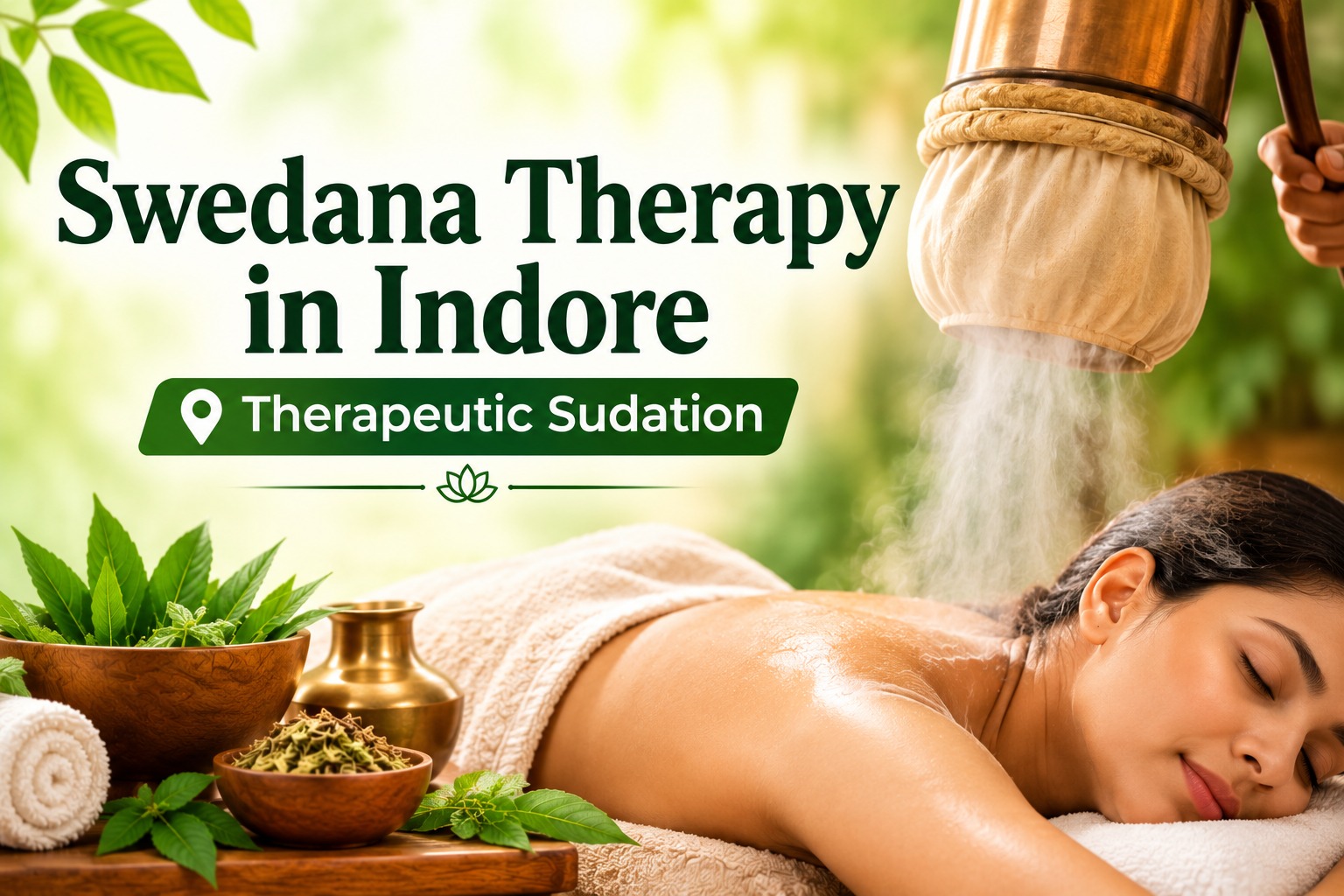
Swedana is a classical Ayurvedic therapy that induces sweating through the controlled application of heat, typically using medicated steam, herbal decoctions, or warm therapeutic applications. It is an important component of Ayurveda and is commonly performed alongside Abhyanga (therapeutic oil massage) as a preparatory step before the main Panchakarma purification procedures. Swedana is also used independently in selected conditions where warmth and sweating are traditionally considered beneficial for promoting comfort and supporting the body’s natural balance.
If you are considering Ayurvedic Swedana therapy in Indore, it is important to undergo a proper Ayurvedic assessment before treatment. At our Ayurveda centre, experienced vaidyas evaluate your Prakriti (body constitution), symptoms, lifestyle, and overall health to determine whether Swedana is appropriate and to create a personalised treatment plan based on classical Ayurvedic principles.
This page is intended for educational purposes and explains the classical rationale, different forms, uses, and safety considerations of Swedana therapy. Because therapeutic sweating is not suitable for every individual or every health condition, Swedana should always be performed under the supervision of a qualified Ayurvedic practitioner, particularly if you have an existing medical condition or ongoing treatment.
What is Swedana?
Swedana means sudation — the deliberate induction of sweating through heat. After the body has been oleated (typically with Abhyanga), warmth is applied through medicated steam, warm herbal poultices, or other heat methods, causing the channels to open and mobilised dosha and impurities to loosen and move toward elimination. It follows oleation because oil first softens and mobilises, and heat then helps carry the loosened material outward.
Forms range from localised applications (such as a warm herbal bolus over a specific area) to whole-body steam in a specialised chamber, chosen according to the person and purpose.
The Classical Rationale
In classical understanding, heat has qualities opposite to those of Vata and Kapha’s cold, heavy, sticky nature, so Swedana is held to relieve cold, stiffness and heaviness, open the body’s channels (srotas), and mobilise dosha loosened by preceding oleation. This is why the oleation-then-sudation sequence is fundamental: together they prepare the body so that the main purification procedures can act effectively. Swedana is also valued classically for easing stiffness and discomfort of Vata and Kapha origin.
Classical Roles & Associations
Swedana is classically valued both as preparation and as therapy:
- As the essential sudation step, paired with oleation, preparing the body before Panchakarma purifications.
- For easing stiffness, heaviness and cold sensations of Vata and Kapha origin, in classical framing.
- For supporting the muscles and joints and relieving certain aches, as understood classically.
- In localised forms for specific regions, and whole-body forms for broader effect.
- As part of managing certain Kapha- and Vata-related conditions within a supervised plan.
These are classical roles and associations, always subject to individual assessment; where a medical condition exists, Swedana is supportive care alongside appropriate treatment.
How Swedana is Traditionally Performed
- Preceding oleation — the body is first oleated, typically with warm-oil Abhyanga, to soften and mobilise dosha before heat is applied.
- Heat application — warmth is applied through medicated steam, warm herbal poultices (potli/pinda sweda), a steam chamber or other suitable method, chosen for the person and purpose.
- Inducing sudation — controlled sweating is induced and monitored to an appropriate degree, avoiding excess, while sensitive areas are protected.
- After-care — the person rests and cools gradually, avoids sudden cold, and follows dietary and lifestyle guidance; within Panchakarma, purification then follows.
The degree of heat and sweating is carefully controlled — enough to achieve the effect, never to the point of exhaustion or harm — with vulnerable areas shielded and the person monitored throughout.
Safety, Precautions & Who It Is Not For
Swedana involves heat, so it carries clear cautions. It is traditionally avoided or adapted in pregnancy, in the very weak, depleted or dehydrated, in certain heart conditions, in states of aggravated Pitta or excessive heat, in some bleeding and inflammatory conditions, and where specific medical situations apply; sensitive areas such as the eyes and, in men, the groin are protected, and excessive sweating is avoided.
As with the broader Panchakarma sequence, therapeutic Swedana requires individual assessment, correct method and degree, and supervision, with medical conditions and medicines considered. It should not be improvised or pushed to extremes, and anyone with heart, blood-pressure or other significant conditions needs particular care and medical guidance.
Frequently Asked Questions
Where can I get Swedana treatment in Indore?
We offers Swedana treatment in Indore as part of authentic Panchakarma therapy. Swedana is an Ayurvedic sweating therapy that uses medicated steam or heat to support relaxation, improve circulation, and prepare the body for other Panchakarma procedures. For appointments, call +91 77778-38938.
What is Ayurvedic Swedana therapy in Indore?
Ayurvedic Swedana therapy in Indore is a traditional treatment in which therapeutic heat or herbal steam is applied to induce sweating. It is commonly recommended after Abhyanga (Ayurvedic oil massage) and is customized according to the patient’s health condition.
What is Panchakarma Swedana treatment?
Panchakarma Swedana treatment in Indore is an important part of Panchakarma that helps prepare the body for detoxification procedures. It is performed under the supervision of an Ayurvedic doctor after assessing the patient’s condition.
What is herbal steam therapy in Ayurveda?
Herbal steam therapy in Indore uses steam infused with Ayurvedic herbs to promote sweating and support muscle relaxation, joint flexibility, and overall wellness. The herbs and treatment duration are selected according to individual needs.
Do you provide Ayurvedic detox therapy in Indore?
Yes. We offer Ayurvedic detox therapy in Indore, including Swedana and other Panchakarma procedures, for eligible patients after a detailed Ayurvedic consultation. The therapy plan is personalized based on your health condition.
What are the benefits of Swedana therapy?
Swedana may help relieve muscle stiffness, joint discomfort, body heaviness, stress, and fatigue while supporting flexibility and overall well-being. Individual results vary, and the therapy is recommended only after proper assessment.
Is Swedana therapy suitable for everyone?
No. Swedana may not be suitable for everyone, including certain individuals with acute illness, fever, uncontrolled medical conditions, or pregnancy. Our Ayurvedic doctor will determine whether the therapy is appropriate after a complete evaluation.
How long does a Swedana therapy session take?
A typical Swedana session usually lasts 15 to 30 minutes, depending on the patient’s health condition and the treatment plan recommended by the Ayurvedic doctor.
How many Swedana sessions are required?
The number of sessions depends on your symptoms, health goals, and overall response to treatment. After consultation, our Ayurvedic doctor will recommend a personalized therapy schedule.
How can I book an appointment for Swedana therapy in Indore?
To consult the experts at our Ayurveda centre for Swedana treatment, Ayurvedic Swedana therapy, herbal steam therapy, or Ayurvedic detox therapy in Indore, call +91 77778-38938 to schedule your appointment. Our team will guide you through the consultation and personalized Panchakarma treatment process.
What is Swedana?
The Ayurvedic therapeutic procedure of inducing controlled sweating through applied heat — usually medicated steam or warm applications — used to open the channels and mobilise dosha, classically paired with oleation before Panchakarma purifications.
Why is Swedana done after oleation?
Oleation (like Abhyanga) first softens and mobilises dosha, and the heat of Swedana then helps carry the loosened material toward elimination — which is why the oil-then-heat sequence is fundamental in Ayurveda.
What is Swedana used for?
As preparation before purification, and classically for easing stiffness, heaviness and cold of Vata and Kapha origin, supporting muscles and joints, and within supervised plans for certain conditions — as supportive care where a condition exists.
What are the forms of Swedana?
They range from localised applications like warm herbal poultices (potli/pinda sweda) over a specific area to whole-body medicated steam in a specialised chamber, chosen according to the person and purpose.
Is Swedana just like a sauna?
It shares the principle of therapeutic heat but is more specific — often medicated, usually preceded by oleation, controlled to an appropriate degree, and integrated into a classical treatment sequence rather than a generic heat session.
Who should avoid Swedana?
It’s traditionally avoided or adapted in pregnancy, in the very weak, depleted or dehydrated, in certain heart conditions, in aggravated-Pitta or excessive-heat states, and in some bleeding or inflammatory conditions — individual assessment is essential.
Can Swedana help joint stiffness and aches?
Classically it’s associated with easing Vata- and Kapha-related stiffness and supporting muscles and joints, as supportive care; a specific joint condition should also receive proper medical evaluation.
Is Swedana safe?
In appropriate candidates with correct method, controlled degree and supervision, yes; because it involves heat, it needs care to avoid excess and is unsuitable in several conditions, so assessment and guidance matter.
Why is excessive sweating avoided?
Over-sudation can cause exhaustion, dehydration and harm; classical practice induces only an appropriate degree of sweating, with the person monitored and sensitive areas protected throughout.
Is Swedana part of Panchakarma?
Yes — paired with oleation, it’s an essential preparatory step that opens the channels and mobilises dosha before the main purification procedures, as well as a therapy in its own right.
Do I need supervision for Swedana?
For therapeutic Swedana, yes — correct method, degree and suitability need qualified guidance, especially given the cautions around heat and various medical conditions.
Does Swedana replace medical treatment?
No — it’s a supportive classical procedure meant to complement appropriate medical care, with existing conditions and medicines accounted for by the supervising practitioner.
Learn More / Consult
This information is intended for general educational purposes only and should not be considered a substitute for an individual medical or Ayurvedic consultation. If you are looking for Swedana therapy in Indore, consult the experienced Ayurvedic doctors at our Ayurveda centre for a personalised assessment and treatment plan.
Call: +91 77778-38938
The clinic’s experienced vaidyas will assess your Prakriti (body constitution), symptoms, lifestyle, and overall health to determine whether Swedana therapy is appropriate for your condition and create a personalised Ayurvedic treatment plan.