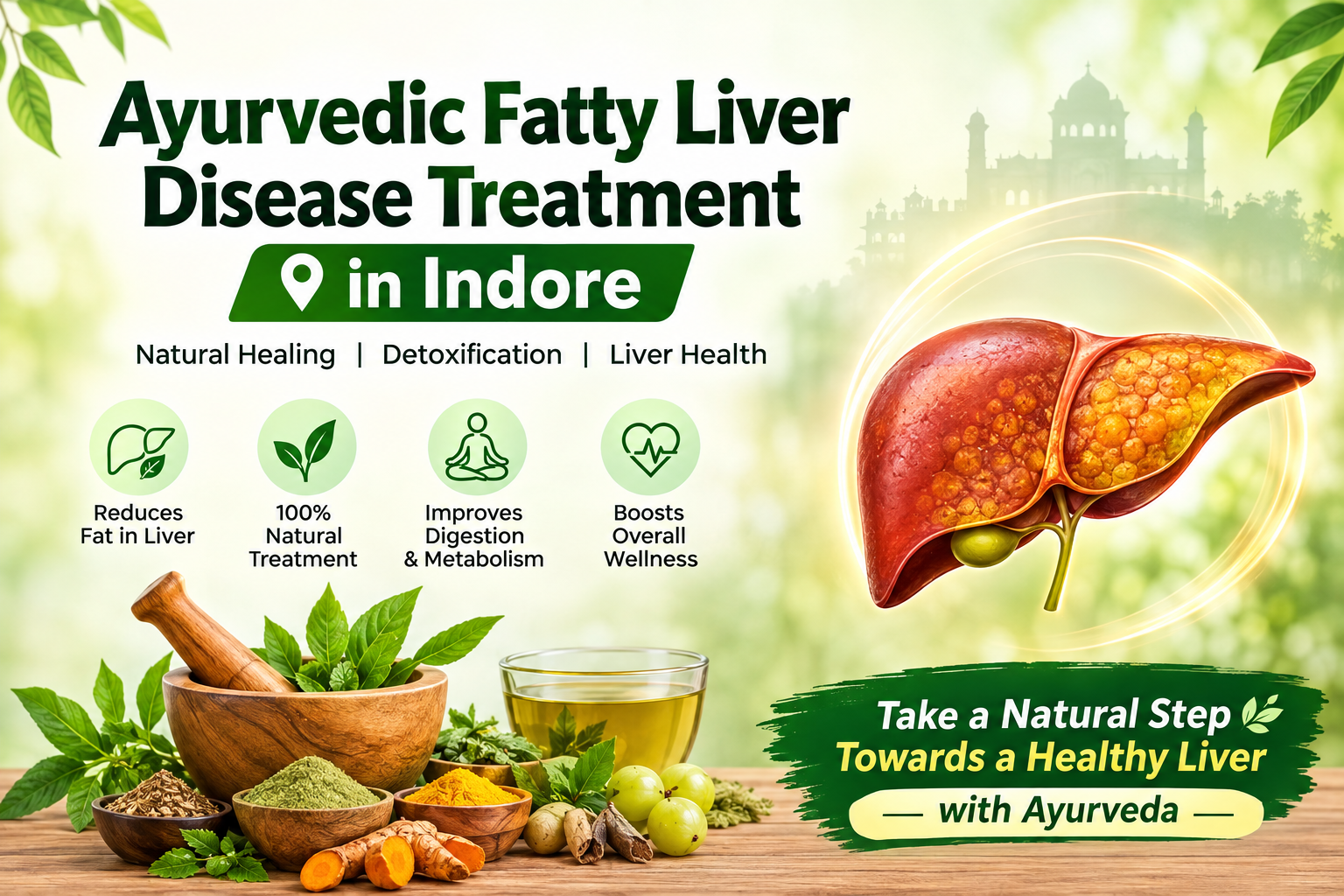
Fatty liver disease occurs when excess fat accumulates within the liver cells. In its early stages, it usually causes no pain or noticeable symptoms, which is why many people discover it incidentally during an abdominal ultrasound or liver function test performed for another reason. With increasing sedentary lifestyles, processed diets, obesity, and metabolic disorders, fatty liver has become one of the most commonly diagnosed liver conditions in India.
At our Ayurveda, an experienced Ayurvedic liver specialist in Indore focuses on identifying the underlying lifestyle and metabolic factors that contribute to fatty liver while promoting long-term liver health through authentic Ayurvedic principles. Every patient receives a personalised assessment based on their Prakriti (body constitution), dietary habits, lifestyle, and overall health before an individualised treatment plan is recommended.
The condition is important because, if left unmanaged, fatty liver may gradually progress to liver inflammation and, in some individuals, liver fibrosis or permanent scarring. However, when recognised early, it is considered one of the most manageable lifestyle-related liver conditions, as its major contributing factors are often linked to everyday habits that can be improved.
If you are looking for an Ayurvedic fatty liver doctor in Indore, the clinic offers personalised Ayurvedic care that may include classical herbal formulations, dietary guidance, lifestyle modifications, and holistic wellness recommendations to support healthy liver function. The goal is to complement appropriate medical care while encouraging sustainable lifestyle changes that promote long-term liver health and overall well-being.
What Is Fatty Liver?
A healthy liver contains little fat. When fat comes to make up a significant share of liver weight, the condition is called fatty liver (steatosis). Medicine broadly distinguishes two forms: non-alcoholic fatty liver disease (NAFLD), linked to diet, weight, insulin resistance and lifestyle; and alcoholic fatty liver, caused by sustained alcohol intake. NAFLD is now the more common form, and notably affects many people of normal weight (“lean NAFLD”), especially in South Asian populations.
Grading on ultrasound (Grade I–III) describes how much fat is visible, not how much damage exists — an important distinction, since an early-grade fatty liver with normal enzymes is a very different situation from advancing inflammation.
Common Symptoms
Early fatty liver is typically silent. When signs do appear, they are usually vague:
- A sense of heaviness or dull discomfort in the right upper abdomen.
- Persistent tiredness and low energy that rest does not fully explain.
- Post-meal heaviness, bloating and sluggish digestion.
- Gradual central weight gain, often with rising sugar or cholesterol readings.
- In later, inflamed stages: loss of appetite, nausea or unexplained weakness.
Because symptoms are unreliable, the condition is usually established by ultrasound and liver function tests rather than by how a person feels.
Causes & Risk Factors
Fat accumulates in the liver when the supply of calories and fat chronically exceeds what the body processes and burns. Common contributors include:
- Sedentary routine with minimal daily physical activity.
- Diets heavy in fried food, refined carbohydrates, sugar and late-night eating.
- Overweight and central obesity — though lean individuals can also be affected.
- Insulin resistance, prediabetes and type 2 diabetes.
- High triglycerides and cholesterol.
- Sustained alcohol intake (in the alcoholic form).
- Certain medications and rapid weight fluctuation, in some cases.
Stages & Possible Complications
Simple steatosis (fat without inflammation) is the earliest and most reversible stage. In a subset of people it progresses to steatohepatitis (fat with inflammation and liver-cell injury, called NASH in the non-alcoholic form), which can slowly generate fibrosis — scar tissue. Advanced fibrosis may eventually become cirrhosis, where scarring is extensive and largely permanent.
Most people with fatty liver never progress to cirrhosis — but because progression is silent, periodic monitoring of liver tests as advised by a doctor is the sensible course. Fatty liver also travels with, and worsens, the wider metabolic cluster: diabetes, blood pressure and cardiovascular risk.
The Ayurvedic View
Classical Ayurveda regards the liver as a seat of Pitta and a centre of metabolic transformation. Fatty liver corresponds to a Kapha-meda (fat tissue) disorder rooted in impaired agni — digestive fire too weak or irregular for the load the daily routine supplies — producing ama (metabolic residue) and excess meda that burden the organ.
The framework’s practical implication matches modern lifestyle-medicine consensus closely: because the cause is a daily pattern, correction is also a daily pattern — food choices, meal timing, activity and sleep — with digestion itself treated as the central variable rather than an afterthought.
Prevention & Lifestyle Care
The measures that prevent fatty liver are the same ones that help reverse its early stages:
- Regular meal timing, with the main meals earlier and dinner light and early.
- Reducing fried food, refined carbohydrates, sugar-sweetened drinks and processed snacks.
- Daily physical activity — even consistent brisk walking meaningfully helps the liver.
- Gradual, sustainable weight correction rather than crash dieting.
- Limiting or avoiding alcohol.
- Managing sugar, lipids and blood pressure with regular monitoring.
- Adequate, regular sleep — metabolic health is built at night as much as by day.
Diagnosis & When to See a Doctor
Fatty liver is commonly diagnosed through an abdominal ultrasound and evaluated with liver function tests, blood sugar, and lipid profile assessments. Additional investigations may be recommended if liver inflammation or fibrosis is suspected. If you have been advised that you have fatty liver, consulting a fatty liver specialist in Indore is the first step towards understanding the severity of the condition and planning appropriate treatment. Persistent right upper abdominal discomfort, unexplained fatigue, or changes in appetite should also be medically evaluated and followed by a structured treatment and lifestyle plan. Seek immediate medical attention if you develop warning signs such as yellowing of the eyes or skin (jaundice), swelling of the abdomen or legs, or significant unexplained weight loss, as these may indicate advanced liver disease requiring prompt assessment.
Frequently Asked Questions
Where can I get fatty liver treatment in Indore?
We offers fatty liver treatment in Indore through a personalized Ayurvedic approach. Treatment may include herbal medicines, dietary guidance, lifestyle modifications, and supportive therapies to promote liver health. For appointments, call +91 77778-38938.
Do you have a fatty liver doctor in Indore?
Yes. Our experienced Ayurvedic doctors provide consultation for patients with fatty liver and other liver-related concerns. Every treatment plan is customized after evaluating the patient’s symptoms, medical history, lifestyle, and overall health.
Why choose your clinic for fatty liver treatment in Indore?
Patients trust our clinic for its holistic Ayurvedic care, individualized treatment plans, experienced practitioners, and focus on supporting liver function naturally. We aim to improve overall digestive and metabolic health through personalized treatment.
Can Ayurveda help manage fatty liver naturally?
Yes. Ayurveda focuses on supporting healthy liver function through herbal medicines, balanced nutrition, weight management, regular exercise, and lifestyle modifications. Patients with fatty liver should also follow their physician’s advice and undergo regular medical evaluations when recommended.
Is fatty liver a serious disease?
Early-stage fatty liver is common and usually reversible, but it should not be ignored: in a minority it progresses silently to inflammation and scarring. Taking it seriously early is exactly what keeps it minor.
Can fatty liver be reversed?
Simple steatosis is widely regarded as reversible through sustained correction of diet, activity, weight and metabolic factors. The earlier the stage, the more complete the reversal tends to be.
I’m not overweight — how do I have fatty liver?
Lean fatty liver is well recognised, particularly in South Asians, driven by insulin resistance, diet quality and inactivity rather than weight alone.
Does Grade I or II tell me how damaged my liver is?
Ultrasound grades describe visible fat, not damage. Liver function tests and further evaluation, where advised, indicate whether inflammation or fibrosis exists.
What symptoms should alert me?
Fatty liver is usually silent; heaviness in the right upper abdomen, persistent fatigue and digestive sluggishness are the common vague signs. Yellowing, abdominal swelling or marked weight loss need prompt medical attention.
Is fatty liver caused only by alcohol?
No — the non-alcoholic form linked to diet, inactivity and metabolic factors is now the more common form. Alcohol causes a separate, additive pattern.
How is fatty liver connected to diabetes?
They share the same root — insulin resistance and metabolic overload — and each worsens the other, which is why fatty liver findings often travel with rising sugar and lipid readings.
How does Ayurveda explain fatty liver?
As a Kapha-meda accumulation rooted in impaired agni (digestion) and a routine that supplies more than the system transforms — making daily diet, timing and activity the treatment territory.
Which foods are worst for fatty liver?
Fried and processed foods, refined carbohydrates, sugar-sweetened drinks and heavy late-night meals are the common aggravators; regular timing matters alongside food choice.
Does fatty liver cause pain?
Usually not; at most a dull heaviness under the right ribs. Significant pain warrants medical evaluation for other causes.
How often should fatty liver be monitored?
Follow your doctor’s advice — typically periodic liver function tests and metabolic profiles, with ultrasound review as recommended for your stage.
Can children get fatty liver?
Yes — paediatric fatty liver is rising with childhood obesity and screen-sedentary routines, and responds to the same family-level lifestyle correction.
Learn More / Consult
This article is for general education and does not replace an individual medical or Ayurvedic consultation.