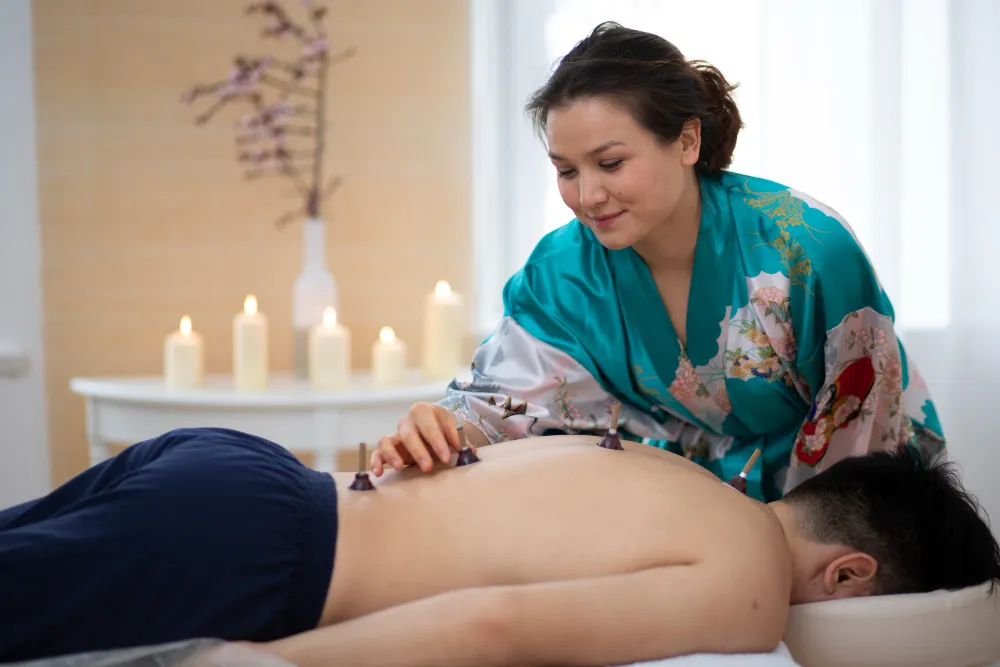
Raktamokshana is a classical Ayurvedic purification therapy that involves the controlled removal of a small quantity of blood in carefully selected cases. In Ayurveda, it is traditionally indicated for conditions associated with Rakta (blood) and aggravated Pitta Dosha. The therapy includes methods such as Jalaukavacharana (therapeutic leech application) and has been described in classical Ayurvedic texts as one of the specialised purification procedures.
At our Ayurveda centre, Raktamokshana therapy in Indore is considered only after a detailed consultation. The clinic’s experienced vaidyas evaluate your Prakriti (body constitution), symptoms, medical history, and overall health to determine whether this therapy is appropriate as part of an individualised Ayurvedic treatment plan.
This page is provided for educational purposes and explains the classical principles, methods, traditional applications, and safety considerations of Raktamokshana. As it is a specialised clinical procedure requiring strict hygiene, sterile techniques, and professional supervision, it should only be performed by qualified Ayurvedic practitioners in a proper clinical setting and should never be attempted without expert guidance.
What is Raktamokshana?
In Ayurvedic physiology, rakta (blood) is one of the vital tissues and is closely linked with Pitta. When blood is considered vitiated — associated in classical framing with certain skin, inflammatory and localised conditions — Raktamokshana aims to remove a measured quantity of the affected blood to relieve the excess and restore balance. Because it addresses the blood directly, it is regarded as specifically suited to rakta-Pitta disorders that other measures may not fully settle.
Methods classically include leech therapy (medicinal leeches), and other controlled techniques. The method, site and quantity are selected precisely for the individual and condition.
The Classical Rationale
Ayurveda treats blood as a tissue that can itself become a seat of disease when vitiated, particularly in conjunction with aggravated Pitta. Where a disorder is understood to reside in or be driven by vitiated rakta — certain localised skin and inflammatory conditions in classical framing — removing a measured quantity of the affected blood is held to relieve the burden at its seat. Leech therapy in particular is valued classically for its precision and selectivity in localised conditions.
Classical Indications
Traditional texts describe Raktamokshana as suited to rakta- and Pitta-related conditions, including:
- Certain localised skin conditions understood as blood-vitiation disorders in classical framing.
- Some localised inflammatory and swelling conditions.
- Particular conditions where classical texts identify vitiated blood as central.
- Localised applications where leech therapy is classically favoured for its selectivity.
These are classical indications requiring individual clinical assessment and are always weighed against modern medical evaluation of the condition.
How Raktamokshana is Traditionally Performed
- Assessment — the practitioner evaluates the condition, constitution, suitability and the specific site, and confirms Raktamokshana is appropriate rather than another measure.
- Method selection — an appropriate method — such as medicinal leech application or another controlled technique — is chosen for the individual, site and condition.
- The procedure — under strict hygienic and sterile conditions and close supervision, a carefully limited quantity of blood is removed by the selected method, with the person monitored throughout.
- After-care — the site is cared for appropriately, the response observed, and dietary and lifestyle guidance follows; the quantity removed is deliberately conservative.
Sterility, correct quantity and supervision are paramount; excessive or unhygienic removal of blood is classically and medically recognised as harmful.
Safety, Precautions & Who It Is Not For
Raktamokshana carries the clearest safety cautions of the purification procedures, because it involves blood and, in some methods, breaking the skin. It is contraindicated in anaemia and states of weakness or depletion, in bleeding disorders and for those on blood-thinning medication, in pregnancy, and in various medical conditions; strict sterility is essential to avoid infection, and only conservative quantities are ever appropriate.
The safety message is emphatic: Raktamokshana must be performed only by a qualified practitioner using sterile technique, after individual assessment that accounts for blood counts, bleeding tendency, medications and overall health. It is never a self-care measure and never appropriate without proper evaluation.
Frequently Asked Questions
What is Raktamokshana?
A classical Ayurvedic purification procedure involving controlled removal of a small, measured quantity of blood — including methods like medicinal leech therapy — used for disorders understood to involve vitiated blood (rakta) and aggravated Pitta.
Where can I get Raktamokshana treatment in Indore?
We offers Raktamokshana treatment in Indore as part of authentic Panchakarma therapy. This specialized Ayurvedic procedure is recommended only after a detailed consultation and is performed by trained Ayurvedic professionals. For appointments, call +91 77778-38938.
What is Ayurvedic Raktamokshana therapy in Indore?
Ayurvedic Raktamokshana therapy in Indore is one of the classical Panchakarma procedures. It is traditionally described as a bloodletting therapy and may be recommended for selected conditions according to Ayurvedic principles after a thorough medical assessment.
What is Panchakarma Raktamokshana?
Panchakarma Raktamokshana in Indore is one of the five major detoxification procedures in Ayurveda. It is performed only when clinically appropriate and under the supervision of an experienced Ayurvedic doctor following proper patient evaluation.
Is Raktamokshana considered a blood purification therapy?
In Ayurveda, blood purification therapy in Indore may include Raktamokshana for carefully selected patients. The suitability of this therapy depends on the individual’s condition and should only be determined by a qualified Ayurvedic practitioner.
Do you provide Ayurvedic blood detox treatment in Indore?
Yes. We offer Ayurvedic blood detox treatment in Indore through individualized treatment plans that may include Panchakarma therapies, herbal medicines, dietary guidance, and lifestyle recommendations based on the patient’s health condition.
For which conditions is Raktamokshana recommended?
According to Ayurvedic principles, Raktamokshana may be considered in selected cases of certain chronic skin disorders, localized inflammatory conditions, and other disorders where it is clinically appropriate. The decision is made only after a detailed consultation and evaluation.
Is Raktamokshana therapy safe?
When performed by qualified Ayurvedic professionals using appropriate techniques and after proper patient selection, Raktamokshana is generally considered safe. However, it is not suitable for everyone, and your doctor will evaluate whether this therapy is appropriate for you.
How long does a Raktamokshana treatment session take?
The duration of Raktamokshana treatment in Indore depends on the method used, the patient’s condition, and the treatment plan. During your consultation, the Ayurvedic doctor will explain the procedure and expected treatment time.
How many Raktamokshana sessions are required?
The number of sessions varies depending on the patient’s diagnosis, overall health, and response to treatment. After assessment, our Ayurvedic doctor will recommend a personalized Panchakarma treatment schedule.
How can I book an appointment for Raktamokshana treatment in Indore?
To consult the experts at our Ayurveda centre Center for Raktamokshana, Ayurvedic blood detox treatment in Indore, or other Panchakarma therapies, call +91 77778-38938 to schedule your appointment. Our team will guide you through the consultation and recommend the most appropriate Ayurvedic treatment plan.
Is bloodletting really still used?
In specific, regulated forms, controlled bloodletting and even medicinal leech therapy continue in modern medicine for particular indications. Ayurvedic Raktamokshana is its classical form, requiring the same strict sterility and supervision.
What conditions is Raktamokshana classically used for?
Rakta- and Pitta-related conditions — certain localised skin, inflammatory and swelling conditions where classical texts identify vitiated blood as central — always subject to individual assessment and modern medical evaluation.
What is leech therapy?
Jalaukavacharana — the application of medicinal leeches to remove blood from a localised area. It’s classically valued for its precision and selectivity in certain localised conditions, done under sterile, supervised conditions.
Is Raktamokshana safe?
Only when performed by a qualified practitioner with strict sterility, conservative blood quantity and proper assessment. It carries the clearest cautions of the purifications and can cause harm if done improperly.
Who should never undergo Raktamokshana?
It’s contraindicated in anaemia, weakness or depletion, bleeding disorders, for those on blood thinners, in pregnancy, and in various medical conditions — individual assessment of blood counts, bleeding tendency and medicines is essential.
How much blood is removed?
Only a deliberately conservative, measured quantity. Excessive removal is classically and medically recognised as harmful, which is one reason supervision and assessment are non-negotiable.
Why is sterility so important here?
Because the procedure involves blood and, in some methods, breaking the skin, strict sterility is essential to prevent infection — making a proper clinical setting mandatory.
Can Raktamokshana be done at home?
No — never. It requires sterile technique, correct method and quantity, close monitoring and prior assessment. Self-attempting it risks infection, excessive blood loss and other serious harm.
How does it fit among the Panchakarma?
Raktamokshana addresses vitiated blood directly, complementing the procedures that target Kapha (Vamana), Pitta (Virechana) and Vata (Basti) — it’s the blood-purification member of the classical set.
Does Raktamokshana replace medical treatment?
No — it’s a classical procedure that complements appropriate medical care, and the underlying condition should also receive proper medical evaluation, with blood counts and medicines accounted for.
How does a practitioner decide if it’s appropriate?
Through individual assessment of the condition and site, constitution, blood counts, bleeding tendency, medications, pregnancy status and overall health — a careful clinical judgement given the procedure’s cautions.
Learn More / Consult
This information is intended for general educational purposes only and should not be considered a substitute for an individual medical or Ayurvedic consultation. If you are looking for Raktamokshana therapy in Indore, consult the experienced Ayurvedic doctors at our Ayurveda centre for a personalised assessment and treatment plan.
Call: +91 77778-38938
The clinic’s experienced vaidyas will assess your Prakriti (body constitution), symptoms, lifestyle, medical history, and overall health to determine whether Raktamokshana is appropriate for your condition and develop a personalised Ayurvedic treatment plan based on classical principles.